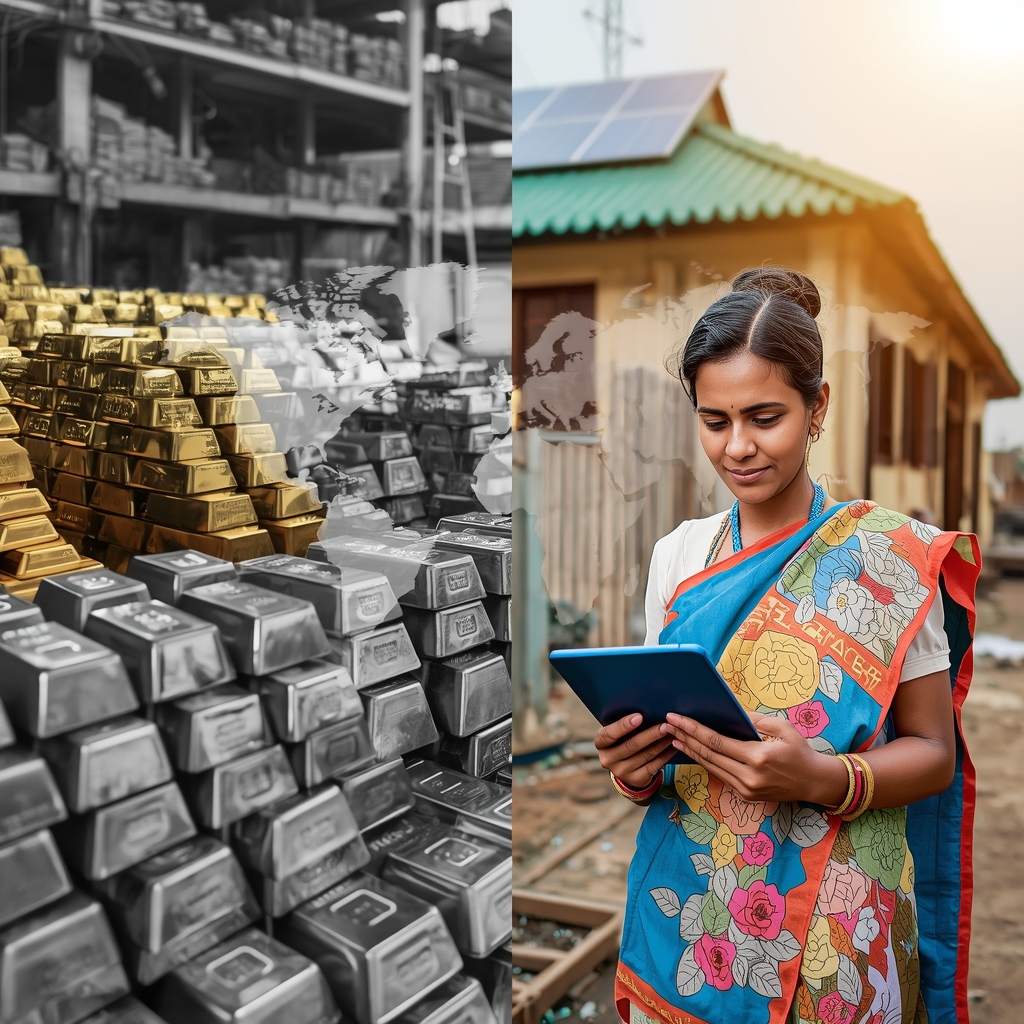
India’s economic narrative is not one of crisis, but of persistent challenge—a story where the past offers not a roadmap, but a set of tools for building resilience. While headlines may search for signs of imminent collapse, a deeper look reveals an economy marked by strong growth figures grappling with deep-seated structural weaknesses.
India’s economy presents a paradox. It is projected to be one of the world’s fastest-growing major economies, with GDP expected to expand by 6.3% to 6.9% in the coming fiscal year. Yet, beneath this robust headline growth lie vulnerabilities that echo past crises, particularly the transformative economic emergency of 1991.
That year, with foreign exchange reserves covering less than three weeks of imports, India stood on the brink of default. The nation’s response—sweeping liberalization reforms—not only rescued the economy but reshaped its destiny. Today, as India navigates a fragmented global order and internal structural gaps, the lessons from 1991 are not historical footnotes but essential guides for steering the economy toward its 2047 development goals.
The Ghost of Crises Past: The 1991 Economic Emergency
The 1991 crisis was the culmination of decades of inward-looking economic policy, often called the “Licence Raj,” characterized by extensive state control, protectionism, and regulation. By the late 1980s, the system was cracking under its own weight. The situation reached a breaking point in 1991 due to a perfect storm of external shocks: the First Gulf War caused oil prices to spike and remittances from Indian workers in the Gulf to drop, while the dissolution of the Soviet Union—a major trading partner—further destabilized the economy.
The most visible sign of distress was the dangerously low level of foreign exchange reserves, which had fallen so low that India could barely finance two weeks’ worth of imports. In a dramatic move, the government had to airlift physical gold reserves to pledge as collateral for emergency loans from the International Monetary Fund (IMF). This national humiliation underscored the severity of the crisis.
The political response was led by Finance Minister Dr. Manmohan Singh, who famously declared in his landmark budget speech, “No power on Earth can stop an idea whose time has come”. The reforms were radical and multifaceted:
- Dismantling the Licence Raj: Industrial licensing was abolished for all but 18 strategic industries, unleashing private enterprise.
- Opening to the World: Tariffs were slashed, foreign investment was encouraged, and the rupee was devalued to boost exports.
- Privatization and Deregulation: The government began reducing its role in business, fostering greater competition and efficiency.
These reforms set India on a new path of higher growth, integration with the global economy, and a dramatic reduction in poverty. They established a core lesson: resilience is built through openness, flexibility, and empowering the private sector.
India’s Economic Landscape in 2025: Growth Amidst Vulnerability
Unlike the acute emergency of 1991, India’s present economic picture is one of strong performance shadowed by persistent vulnerabilities.
On the surface, the data is impressive. The economy grew by 7.8% year-over-year in the first quarter of fiscal year 2025-26. This strength is driven by rebounding private consumption, healthy investment activity, and a robust services sector. Surveys of global executives consistently rank India among the most optimistic markets worldwide.
However, key structural challenges threaten the sustainability and inclusivity of this growth:
- The MSME Productivity Gap: Micro, Small, and Medium Enterprises (MSMEs) are the backbone of the economy, contributing nearly 30% of GDP and employing over 240 million people. Yet, their productivity is a critical weakness. While MSMEs in advanced economies operate at 45-70% of the productivity of large firms, in India, this figure is only about 18%. They are hampered by limited access to formal credit, outdated technology, and intense competition.
- Global Fragmentation and Trade Risks: The world is moving toward geopolitical blocs and rival trade networks. For a globally integrated economy like India’s, this poses a significant risk. Recent shifts in U.S. trade policy and tariffs are a prime concern for executives, potentially impacting key export sectors. While India is pursuing strategies like promoting trade in rupees, the limited international adoption of the currency highlights the challenges of navigating a fragmented system.
- The Fiscal Tightrope: India’s general government debt is estimated at approximately 83% of GDP. While lower than many advanced economies, it limits the fiscal space available to respond to shocks or invest heavily in social and physical infrastructure. Managing this debt while meeting massive development needs is a delicate balancing act.
The table below summarizes the key contrasts between the acute crisis of 1991 and the structural challenges of today:
Blueprint from the Past: Applying 1991’s Lessons to Today’s Challenges
The 1991 reforms were a macroeconomic response to a macroeconomic crisis. Today’s structural problems require a more nuanced, microeconomic application of the same principles: liberalization, formalization, and strategic global integration.
- For MSMEs: From Survival to Scale
The 1991 philosophy of removing barriers must be directed at the MSME sector. This means not just easier credit, but creating an ecosystem for growth. Policies must facilitate deeper digital adoption beyond just payments, integrating MSMEs into e-commerce and supply chains. Addressing the estimated ₹30 lakh crore credit gap requires innovative financial products and leveraging data for lending. The goal should be to help small firms formalize, specialize, and integrate into global value chains, mirroring how Chinese SMEs became export powerhouses. - For Global Integration: Strategic Realignment
The 1991 playbook was about opening up indiscriminately. The 2025 strategy must be about strategic and resilient integration. This involves actively diversifying export markets and signing new free trade agreements while strengthening domestic manufacturing capabilities through initiatives like the Production Linked Incentive (PLI) schemes. The aim is to build an economy that is deeply connected to the world but resilient to shocks in any single region or market. - For Long-Term Resilience: Investing in Foundations
The reforms of the past were primarily economic. The next phase must integrate economic, social, and environmental resilience. This means aligning industrial policy with climate goals, as seen in India’s leadership of the International Solar Alliance. It also requires investing in human capital through education and healthcare, and building climate-resilient infrastructure to protect against future shocks. As the World Bank notes, accelerating such reforms is critical for India to achieve high-income status by 2047.
Ultimately, India’s path forward is not defined by avoiding a single crisis, but by continuously adapting the lessons of its past to build a more dynamic, inclusive, and resilient economy. The vision set in 1991—of an India confident and integrated into the global economy—remains the guiding star. The task now is to extend that success from the macro level to the micro level, ensuring that the benefits of growth reach the smallest enterprises and every citizen, securing India’s place as a leading economy of the 21st century.