When media becomes a government mouthpiece, truth becomes the first casualty and democracy follows close behind.
An independent press, often called the Fourth Estate, is designed to act as a critical check on power in a democracy. Its role is to provide citizens with the truthful information necessary to hold their leaders accountable. However, this essential function is under threat globally from sophisticated political influence, financial pressure, and direct state control. When the media becomes a government puppet, it ceases to inform the public and instead becomes a tool for propaganda, social division, and the consolidation of authoritarian power.
The consequences are a decline in public trust, the rise of misinformation, and the erosion of democratic foundations. A striking 2024 survey reveals that while 73% of Americans believe a free press is vital for society, only about a third think the media is “completely free,” and half believe news organizations are greatly influenced by political interests. Restoring media integrity requires understanding how this influence operates, learning from historical and contemporary examples, and implementing bold structural and constitutional reforms.
The Cornerstone of Democracy: Why an Independent Press is Non-Negotiable
The concept of a free press is a foundational democratic principle, enshrined in documents like the First Amendment to the U.S. Constitution, which prohibits laws “abridging the freedom… of the press”. This protection is not granted for the benefit of journalists or media corporations, but for the public. A free press serves three indispensable functions:
- Watchdog on Power: It investigates and exposes corruption, abuse of power, and government misconduct. As the U.S. Supreme Court has recognized, the press provides a check on all branches of government.
- Informed Citizenry: It provides citizens with the facts and diverse perspectives needed to make reasoned decisions, especially at the ballot box. Thomas Jefferson famously remarked that given the choice between “a government without newspapers or newspapers without a government, I should not hesitate a moment to prefer the latter”.
- Platform for Debate: It fosters a “marketplace of ideas,” allowing for public discussion and dissent, which is essential for a healthy society.
Without these functions, democracy becomes a hollow shell. Citizens, unable to scrutinize their leaders or access reliable information, cannot exercise genuine sovereignty.
The Puppet State: Consequences of a Government-Controlled Media
When media independence is compromised—whether through coercion, financial dependency, or regulatory capture—it transforms from a public watchdog into a state-controlled public relations arm. The results are profoundly damaging:
- Erosion of Public Trust: When media is seen as a partisan actor or government mouthpiece, public confidence collapses. A Gallup poll tracking trust from 1972 to 2023 found that only 32% of Americans had “a great deal” of confidence that the media reports news “fully, fairly, and accurately”. This distrust fuels cynicism and disengagement.
- Spread of Misinformation and Propaganda: State-influenced media prioritizes narrative over truth. It disseminates “alternative facts,” suppresses inconvenient stories, and uses classic propaganda techniques to shape public opinion in favor of those in power.
- Social Division and Scapegoating: Governments often use pliant media to deflect blame and solidify their base by targeting minority groups. This turns the press from a unifying force into a weapon of social division.
- Stifling of Accountability: Corruption and incompetence go unchecked. Officials operate without fear of exposure, and the public loses its primary mechanism for oversight.
Case Studies: From Sophisticated Manipulation to Blatant Propaganda
The manipulation of media is not a phenomenon limited to overt dictatorships. It occurs across the political spectrum and in various forms.
- The “Puppet Master” Presidency (U.S., 2009-2017): The Obama administration was notably adept at “limiting, shaping and manipulating media coverage”. It employed strategies like bypassing traditional White House correspondents for “soft” interviews on entertainment shows, imposing unprecedented control on photographer access, and creating its own content (videos, photos) for direct release via social media. This allowed the administration to control its message meticulously, limiting journalists’ ability to ask tough, follow-up questions. One veteran reporter noted the president’s policy development was “almost totally opaque”. This case shows how even in a robust democracy, technological change and media strategy can shift the balance of power from the press to the government.
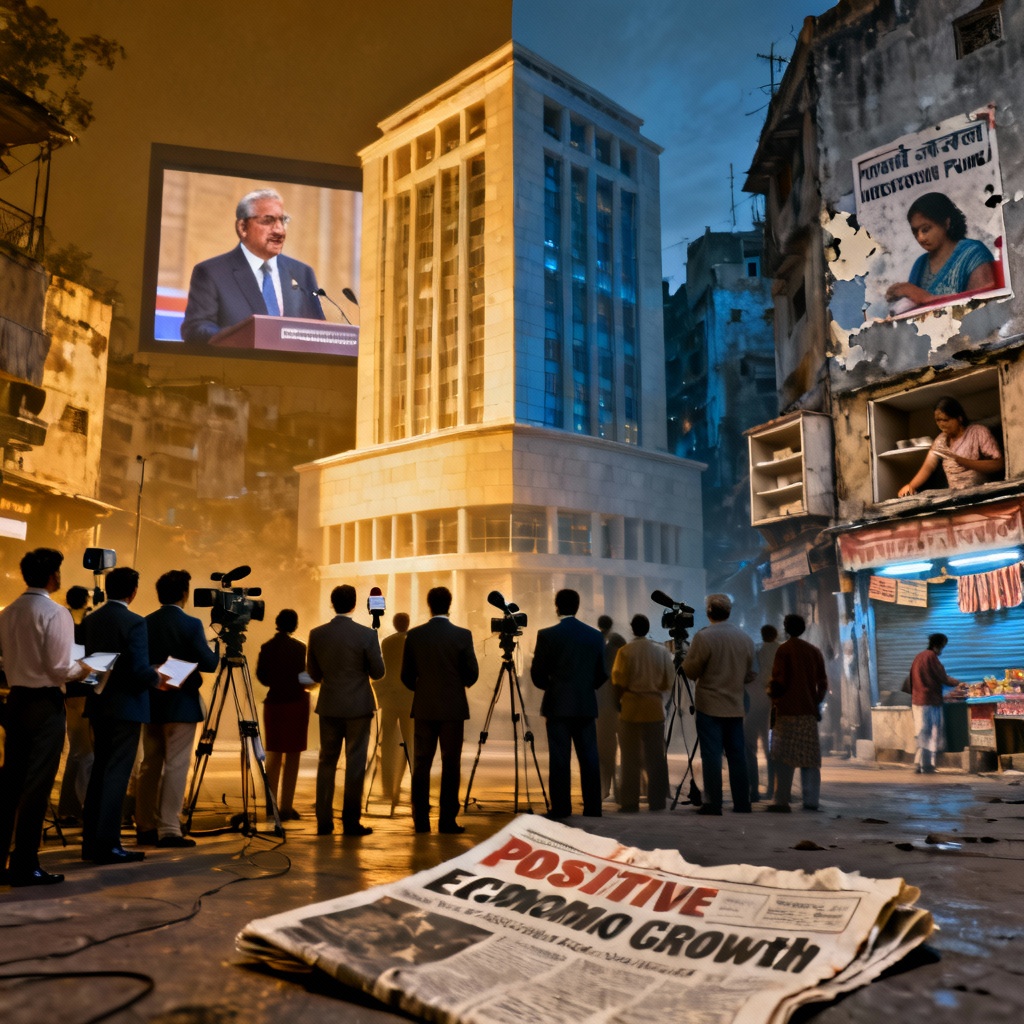
- Communal Scapegoating and “Corona Jihad” (India, 2020): During the COVID-19 pandemic, a religious gathering hosted by the Muslim group Tablighi Jamaat became a super-spreader event. Much of the Indian media, particularly prominent news channels, engaged in blatantly biased reporting. They sensationalized the event, with some outlets coining the term “Corona jihad,” falsely framing the outbreak as a deliberate act by the Muslim community. This coverage ignored similar gatherings by other groups and fueled widespread stigma and attacks. The Bombay High Court later ruled that the attendees had been unfairly “made scapegoats,” but the damaging narrative had already taken root, demonstrating how media can amplify government-favored narratives that deepen social fractures.
Reforming the Foundation: Constitutional and Structural Protections
Protecting media independence requires more than good intentions. It demands concrete, structural reforms embedded in a strong legal framework. Based on global best practices and constitutional principles, key reforms should include:
- Statutory Protection for Editorial Independence: Beyond a constitutional guarantee, laws should explicitly protect newsrooms from owner or advertiser interference on editorial content. This could mirror the concept of a “firewall” between the business and editorial departments, enforced by an independent media regulator.
- Transparency in Ownership and Funding: Laws must mandate full public disclosure of media ownership structures and significant sources of revenue, including government advertising. Sunshine laws prevent the state from secretly controlling media through financial patronage. A clear, public log of government advertising spending across media outlets can reveal attempts to buy favor.
- Strengthening “Freedom of Information” Laws: A powerful antidote to state secrecy is robust public access to government information. Freedom of Information (FOI) acts must be strengthened, with narrow exemptions, low costs, and strict penalties for non-compliance, empowering journalists and citizens to investigate.
- Legal Safeguards Against Strategic Lawsuits (SLAPPs): To protect journalists from intimidation through costly, frivolous lawsuits, laws must provide for the early dismissal of Strategic Lawsuits Against Public Participation (SLAPPs) and allow defendants to recover legal costs. The U.S. standard from New York Times Co. v. Sullivan (1964), which protects good-faith reporting on public officials, is a critical precedent that should be explicitly adopted.
- Independent Public Service Media: A well-funded, editorially independent public broadcaster (like the BBC or CBC) serves as a benchmark for quality, non-commercial journalism. Its governance must be insulated from political interference, with board members selected by an independent committee, not government appointees.
- Protection for Journalistic Sources and Against Prior Restraint: The law must recognize a journalist’s privilege to protect confidential sources. Furthermore, following the precedent of Near v. Minnesota (1931) and the Pentagon Papers case (1971), the legal barrier to prior restraint—government censorship preventing publication—must remain exceptionally high.
A Call for Vigilance
A press that is free from political influence is not a passive institution; it is an active, sometimes uncomfortable, participant in democracy. The threats it faces are evolving—from direct censorship to sophisticated digital manipulation and financial coercion. The examples of the Obama administration’s media strategy and the Tablighi Jamaat coverage in India show that these dangers exist in both subtle and blatant forms.
The reforms outlined here are not a panacea, but they provide a blueprint for building media institutions that are resilient, transparent, and truly dedicated to the public interest. The choice is stark: a society that values a free press must actively construct the legal and cultural bulwarks to defend it. As a free press withers, so too does the informed citizenry upon which democratic self-governance depends. The fight to keep the Fourth Estate free is, in essence, the fight to preserve democracy itself.